Tennis Court Resurfacing in Adelaide
Find out whether each quote is for the same job before comparing them. The sources describe a resurfacing as several layers of work and a court upgrade as something that can reach past the surface to the fence, the kerb and the drainage: the Barossa Council lists existing surface removal, base repair, a new asphalt layer and new acrylic surfacing layers, then line marking, for its Angas Recreation Park courts.
Thanks — we have your enquiry. Someone will be in touch shortly. Prefer to talk now? Call (08) 8330 4909.
What tennis court resurfacing in Adelaide actually involves
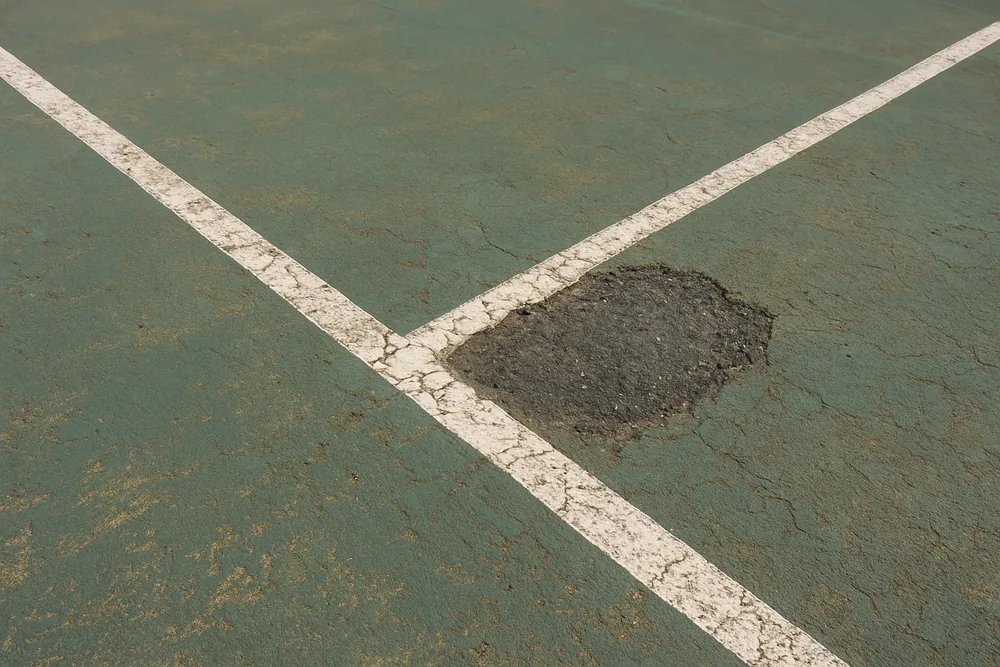
That list is one council's project, not a standard. The manufacturers' data sheets read for this site cover the colour layer and what must be true of the surface under it. The first manufacturer's data sheet says: “All surfaces to be coated must be clean, sound, free from contaminants including oil, mould release, dust, dirt, silicone, mud, grease, salt, efflorescence, animal droppings and any loose or flaking material”. The second manufacturer's data sheet says: “ensure all surfaces are free of oil, dirt, grease, and other contaminants. Fill any cracks and holes prior to application.” The data sheets page quotes what each says about curing, coats and weather.
Resurface or rebuild
The City of Norwood Payneham & St Peters says the demolition works at its Payneham Oval tennis courts removed the playing surface together with fencing, kerbing and stormwater infrastructure. The resurface or rebuild page says what that shows and what it does not.
What this site leaves out
Which coating a provider uses, how it is applied, what it costs and how long it takes are for the provider to say, and this site states none of them. Nor does it say whether resurfacing alone needs a planning or building approval in South Australia: no official page read states a rule. Ask the provider for a written quote that names the layers, what it assumes about the fence, kerb and drainage, and the data sheet it works to.
What is particular to Adelaide is how differently its councils describe a court job: Goodwood would move a court edge, Payneham removed the fence and kerb, Colonel Light Gardens adds lights and a new fence, and Park Holme re-lined its courts for two sports. The rules check on the costs page lists the South Australian lines with their sources and read dates.
Tennis court resurfacing costs and rules check
Tennis Court Resurfacing in Adelaide — common questions
What does a resurfacing include?
The Barossa Council lists existing court surface removal, quarry rubble base repair, a new glass grid geo layer, a new asphalt layer, new acrylic surfacing layers and line marking for one of its projects. That is one council's job, so ask which of those a quote includes and which it leaves out.
Does a new court need to cure before it is coated?
Two manufacturers' data sheets address it. The first manufacturer's data sheet says: “Allow concrete to cure a minimum of 30 days”. The second manufacturer's data sheet says: “New asphalt courts should cure for at least 28 days before painting.” It also says: “New concrete courts require a minimum 28 day curing period, and acid etching must be undertaken.” Ask whoever quotes which sheet they work to.
Where does the wash water go?
EPA South Australia says that if using a high-pressure cleaner, all waste water should be directed to a soakage area such as the garden or lawn, and that painting washwater cannot be discharged to the stormwater system.
Tennis Court Resurfacing by suburb
- Adelaide
- Tennis Court Resurfacing in Goodwood
- Tennis Court Resurfacing in Payneham
- Tennis Court Resurfacing in Colonel Light Gardens
- Tennis Court Resurfacing in Park Holme
- Norwood
- College Park
- South Brighton
- Modbury
Ready to get your tennis court resurfacing job quoted?
Free quote, one local provider, no obligation.
Last reviewed · Updated · First published